
You just finished a full meal – not a snack, a proper meal. Your stomach feels full. And yet, 30 minutes later, you’re thinking about food again. An hour later, you’re genuinely hungry.
You start questioning yourself. Am I just greedy? Do I lack self-control?
Here’s the truth: constant hunger isn’t about willpower. It’s about your blood sugar, your hormones, your stress levels, and what you’re actually eating. Once you understand what’s driving it, you can fix it.
What’s Actually Happening When You’re Always Hungry?
Hunger isn’t just about an empty stomach. It’s regulated by hormones, blood sugar, and signals between your gut and brain. When this system is out of balance, you feel hungry even when you’ve eaten enough calories.
Your Blood Sugar Is On a Rollercoaster
When you eat foods that spike your blood sugar quickly – refined carbs, sugary foods, meals without protein or fat – your body releases insulin to bring that sugar down. But insulin often overcorrects, crashing your blood sugar too low. This triggers intense hunger and cravings.
You eat something else that spikes your blood sugar again. Insulin surges. The cycle repeats.
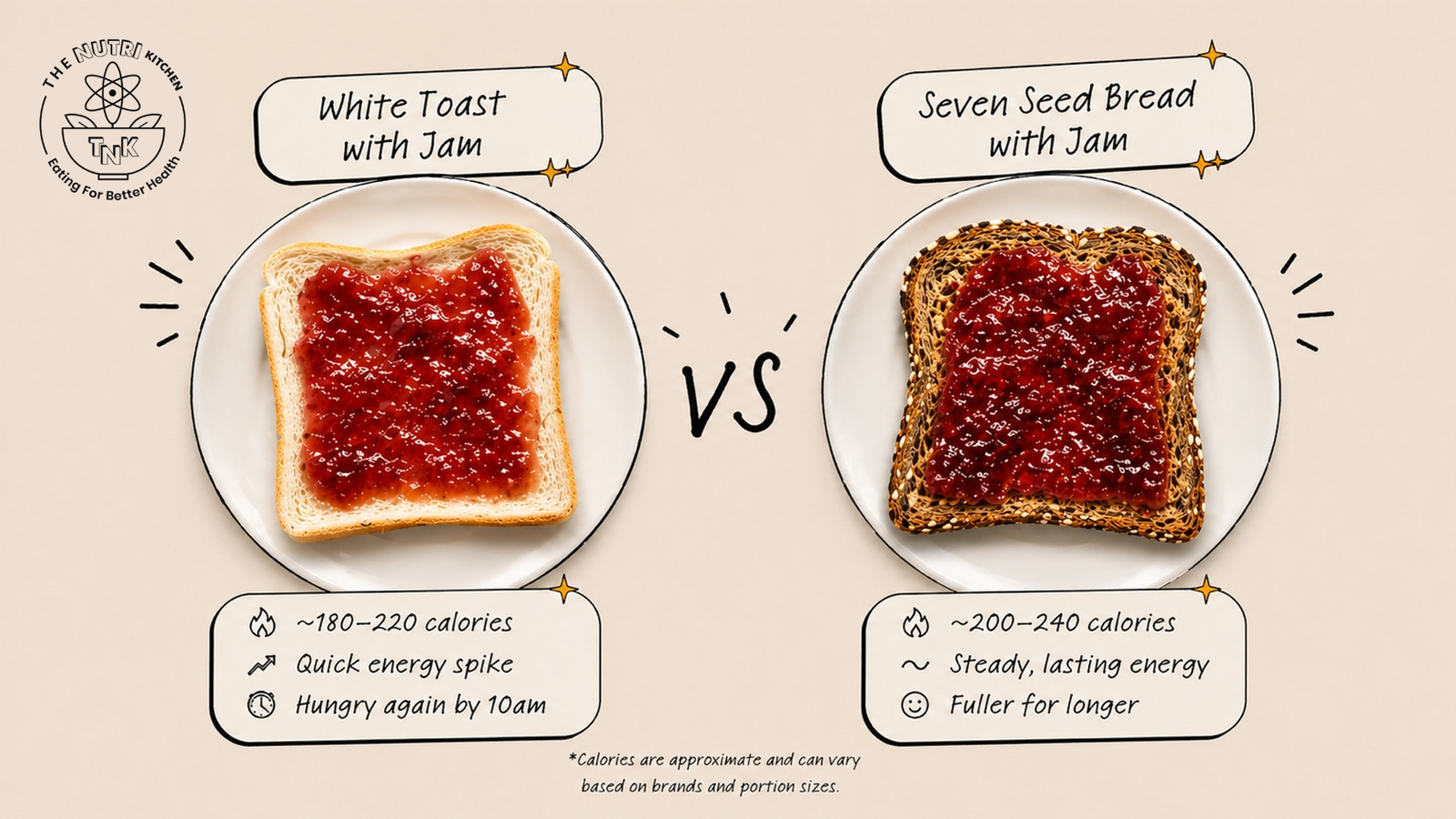
A breakfast of toast and jam might give you 200 calories, but you’ll be starving by 10am. A breakfast with the same jam but balanced with protein and fat keeps you satisfied for hours.
So simply swapping white bread for some seeded bread and using that as the base for jam will not only be slower to digest but keep you fuller for longer and more satisfied overall.
Your Meals Are Missing Key Nutrients
Not all calories satisfy hunger equally. Your body needs protein, healthy fats, and fiber to trigger the hormones that tell your brain you’re full.
Protein stimulates hormones like GLP-1 and peptide YY that suppress appetite. When meals are low in protein, these satiety signals don’t fire properly. You feel physically full (your stomach is stretched), but the hormonal “I’m satisfied” signal never comes.
Fat slows digestion, keeping you fuller longer. Fiber does the same while stabilising blood sugar. When meals lack these nutrients – even if they’re high in calories – you’ll be hungry again quickly.
Your Stress Hormones Are Elevated
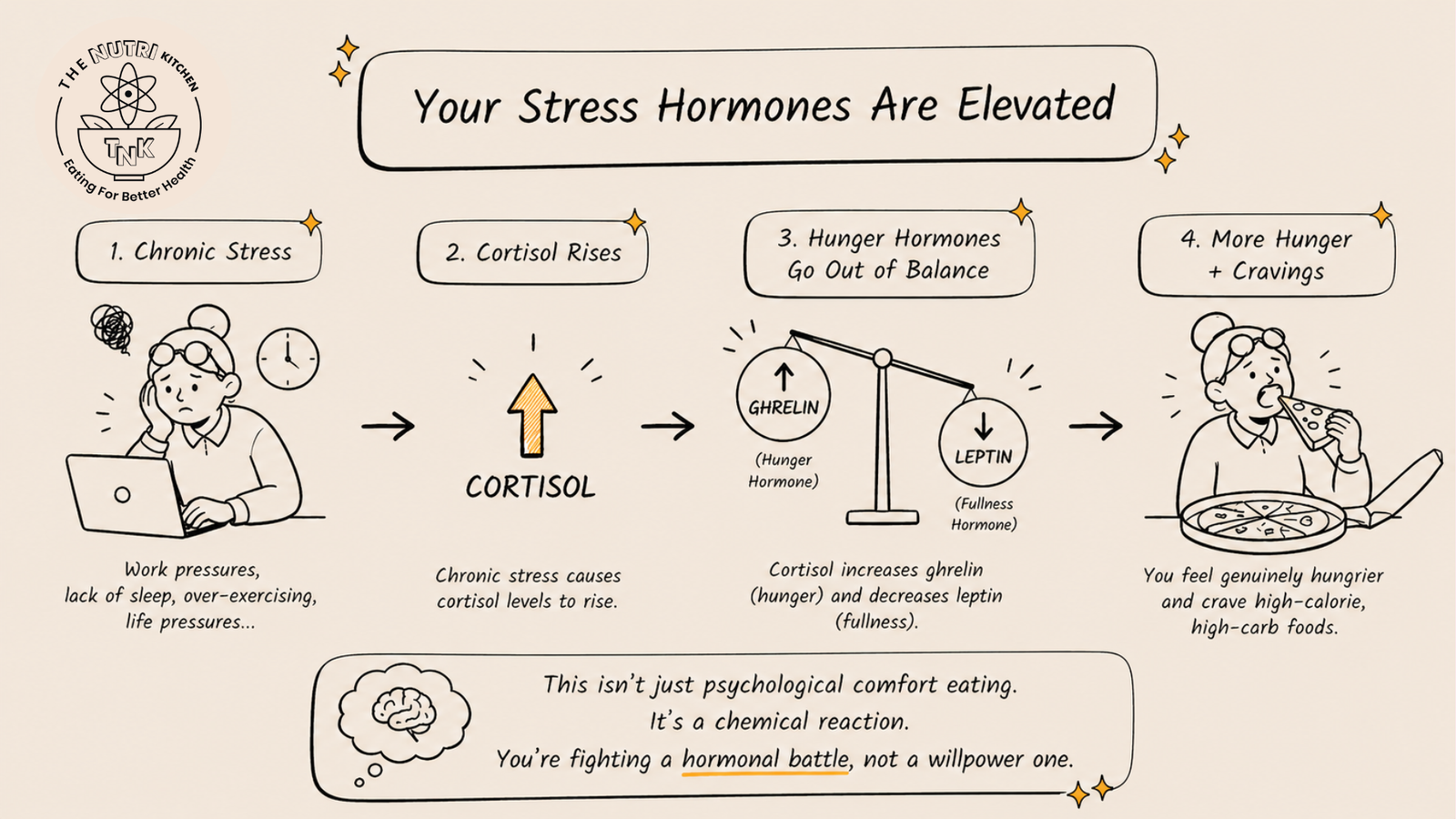
Chronic stress raises cortisol, and high cortisol increases appetite – especially for high-calorie, high-carb foods.
This isn’t just psychological comfort eating. Cortisol directly affects ghrelin (your hunger hormone) and leptin (your fullness hormone), making you genuinely hungrier even when your body doesn’t need more energy.
If you’re constantly stressed – from work, lack of sleep, over-exercising, or life pressures – your hunger signals are being chemically amplified. You’re fighting a hormonal battle, not a willpower one.
You’re Not Actually Eating Enough
Chronic under-eating makes you constantly hungry.
When you restrict calories too severely – especially if you’ve been dieting for a while – your body adapts by increasing hunger hormones and decreasing fullness hormones. It’s trying to get you to eat more because it perceives a famine.
You might think you’re eating “plenty,” but if you’ve been restricting for months or years, your body is actively fighting to restore energy balance. The hunger isn’t weakness – it’s your metabolism trying to protect you.
Your Sleep Is Poor
Sleep deprivation increases ghrelin (hunger hormone) and decreases leptin (fullness hormone). Even one night of poor sleep makes you significantly hungrier the next day.
If you’re consistently sleeping poorly, you’re hormonally primed to be hungrier and less satisfied by food.
You’re Dehydrated
Thirst signals can be mistaken for hunger. If you’re not drinking enough water, your body might send hunger signals when it actually needs fluids. This is especially common mid-afternoon.
Our number 1 tip is to always have a glass of water first ad wait 20 minutes to see if you’re actually hungry
What Actually Helps (And Why It’s Not Simple)
You can’t fix constant hunger by willpower. You need to address what’s driving it.
This involves understanding how your meals affect your blood sugar, which specific nutrients your body needs more of, how your stress and sleep are affecting your hunger hormones, and whether past dieting has dysregulated your appetite signals.
It also means learning to recognize true hunger versus cravings driven by blood sugar crashes, stress, or habit.
The challenge? Everyone’s hunger drivers are different. What works for your friend might not work for you. Your solution needs to account for YOUR specific patterns, YOUR stress levels, YOUR history with food.
Figuring this out alone – through trial and error while battling constant hunger – is overwhelming. Most people need support to identify their specific drivers and create a sustainable strategy.
The TNK Approach to Constant Hunger
At The Nutri Kitchen, we investigate what’s actually driving your hunger – not just tell you to “eat more protein” and hope it works.
This means:
➡️ Understanding your eating patterns and blood sugar response
➡️ Identifying which nutrients you may be under-eating
➡️ Assessing your stress levels, sleep, and how these influence appetite hormones
➡️ Recognising whether past dieting has disrupted your hunger cues
➡️ Creating a personalised strategy that addresses your specific drivers
Every person’s hunger patterns are different. Your support needs to reflect your specific situation, the activities you do, your lifestyle.
TNK Takeaway
Constant hunger isn’t about willpower – it’s driven by blood sugar rollercoasters, inadequate protein/fat/fiber, elevated stress hormones, chronic under-eating from past dieting, poor sleep, and dehydration. These increase ghrelin (hunger hormone) and decrease leptin (fullness hormone). A carb-heavy meal spikes blood sugar, triggers insulin, then crashes – leaving you starving an hour later. The solution isn’t generic advice – it’s understanding YOUR specific hunger drivers and creating a personalised strategy that fits into your lifestyle.
Ready to Finally Feel Satisfied After Eating?
If you’re tired of being constantly hungry, fighting cravings, and feeling like something’s wrong with you – we can help.
This isn’t a sales call. If we don’t think we can help, we’ll tell you. If there’s something else to try first, we’ll say that too.
No pressure. Just honest expert guidance from a Registered Nutritionist who understands the science of hunger.
The Nutri Kitchen led by Farihah Syed, Registered Nutritionist (ANutr) with a background in psychology and education. Specialising in sustainable fat loss and maintenance , hormones, and sustainable behaviour change. Working with clients across the UK online and in-person.