Some weeks you feel unstoppable – energised, focused, ready to take on the world. Other weeks? You’re exhausted, bloated, craving everything in sight, and wondering why the same salad that worked last week isn’t keeping you full today.
You’re not imagining it. Your body genuinely changes throughout your cycle, and what works in week one might work against you in week three.
Understanding your menstrual cycle isn’t just about tracking your period. It’s about understanding why your energy, hunger, mood, and even your body’s response to food shifts dramatically throughout the month – and what to do about it.
Your Periods: The Four Phases of Your Cycle
Your menstrual cycle isn’t just one thing – it’s four distinct phases, each with different hormone levels that affect everything from your metabolism to your cravings.
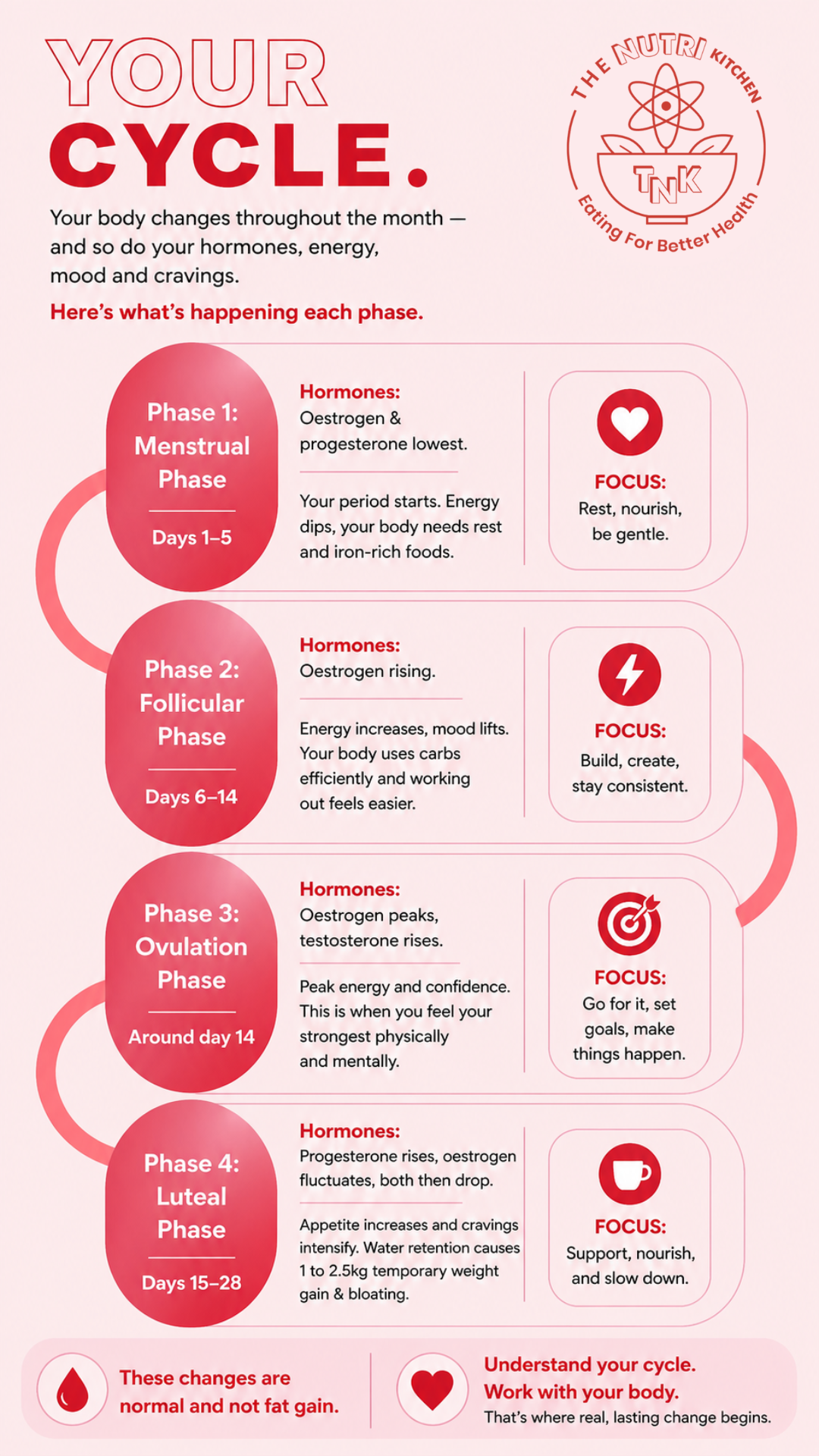
Menstrual Phase (Days 1-5)
This is when your period starts. Both estrogen and progesterone are at their lowest, which is why energy often dips. You might feel more withdrawn, crave comfort foods, and need more rest than usual.
Your body is shedding the uterine lining, which requires energy and can leave you feeling depleted. Iron levels can drop if your period is heavy, contributing to fatigue.
Follicular Phase (Days 6-14)
After your period ends, estrogen starts climbing. This is when most women feel their best – energy rises, mood lifts, motivation increases. Your metabolism is relatively stable, and your body uses carbohydrates efficiently.
This is often when you feel most social, productive, and confident. Workouts feel easier. Food choices feel simpler.
Ovulation (Around Day 14)
Estrogen peaks right before ovulation, then drops. Testosterone also rises briefly. This is typically your highest energy point in the cycle. You might feel more outgoing, attractive, and powerful.
But this peak is short-lived. As estrogen drops post-ovulation, things start to shift.
Luteal Phase (Days 15-28)
This is where things get interesting – and often frustrating. Progesterone rises significantly while estrogen fluctuates. This phase is split into two parts:
- Early luteal (Days 15-21): Progesterone climbs, which can increase appetite and body temperature slightly. You might notice you’re hungrier than usual, especially for carbs.
- Late luteal/PMS (Days 22-28): Both hormones drop if pregnancy hasn’t occurred. This is when PMS symptoms hit – bloating, breast tenderness, mood swings, intense cravings, and often weight gain (typically water retention, not fat).
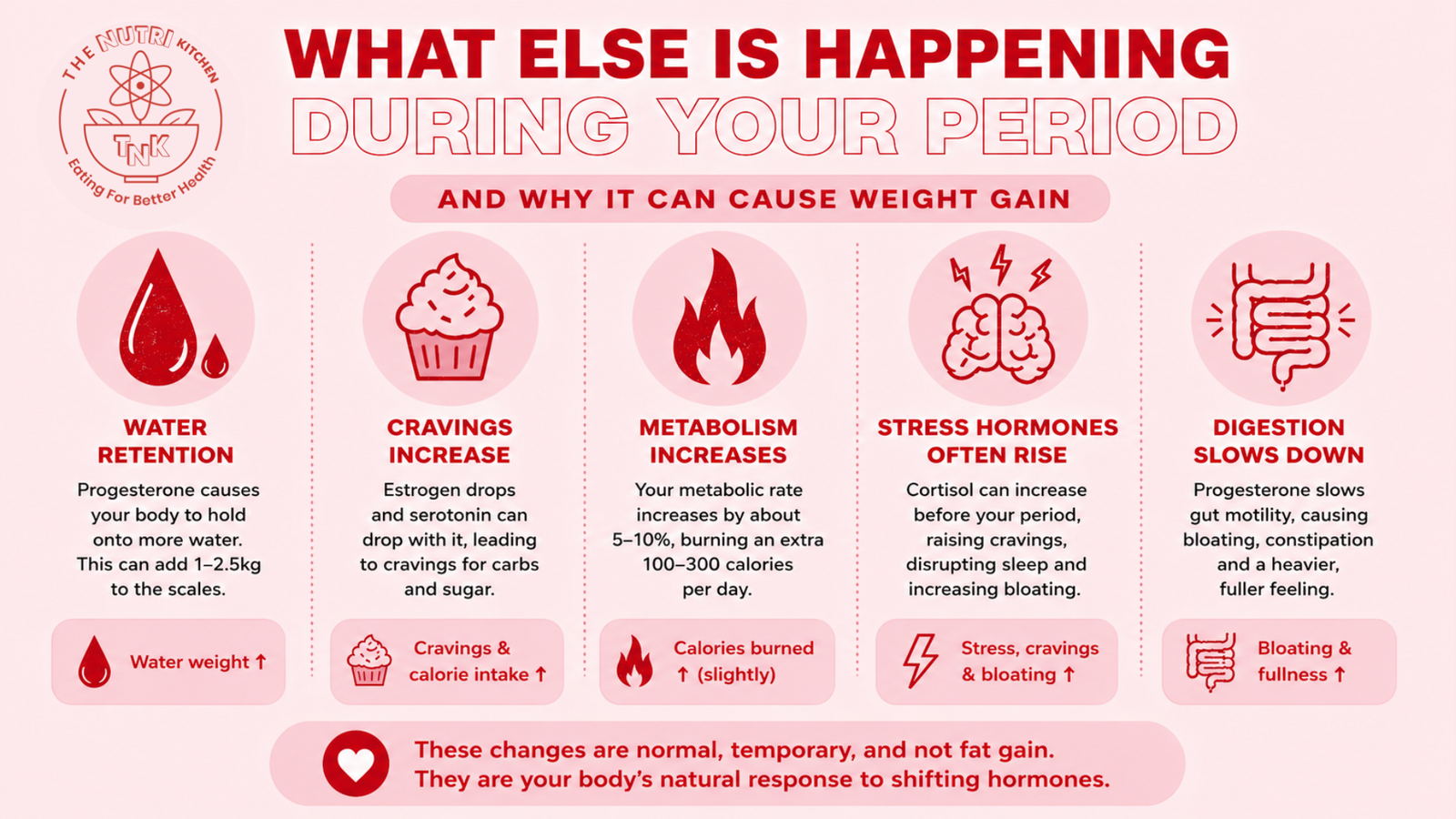
Your metabolism actually increases slightly in this phase – you’re burning an extra 100-300 calories per day. But you’re also hungrier, more tired, and craving high-calorie foods. The hunger often outpaces the metabolic increase.
Why You Feel So Different Each Week
Energy Levels Fluctuate
When estrogen is high (follicular and ovulation phases), you have more energy, better focus, and higher motivation. When it drops (menstrual and late luteal), everything feels harder.
This isn’t laziness. It’s hormones directly affecting your neurotransmitters and energy production.
Your Appetite Changes
Progesterone increases appetite – it’s preparing your body for potential pregnancy. In the luteal phase, you’re genuinely hungrier. Those cravings for chocolate, crisps, or carbs aren’t weakness – they’re hormonal.
Serotonin (your mood-regulating neurotransmitter) also drops before your period, which is why you crave carbs and sugar. They temporarily boost serotonin, making you feel better.
Your Body Holds Water
In the luteal phase, progesterone causes your body to retain water. You might gain 2-5lbs that has nothing to do with fat. Your rings feel tight, your stomach bloats, your face looks puffier.
This is temporary. The water weight drops once your period starts.
Your Metabolism Speeds Up (Then Slows Down)
During the luteal phase, your basal metabolic rate increases by about 5-10%. You’re burning more calories at rest. But because you’re also hungrier and craving energy-dense foods, it’s easy to overshoot that increase.
Then when your period starts, metabolism normalizes again.
Why “Eating the Same Every Day” Doesn’t Work
Most women are told to eat consistently – same calories, same macros, every single day. But your body isn’t consistent. Your hormones are cycling, and your needs change with them.
Eating the same amount of food when estrogen is high (and you’re naturally more active and energetic) versus when progesterone is high (and you’re naturally hungrier and more tired) doesn’t make physiological sense.
The same portion that keeps you satisfied in week two might leave you starving in week three. That’s not a you problem – that’s a hormone problem.
What Actually Helps
Understanding your cycle is the first step. Working WITH your hormones rather than against them is the second.
Supporting energy in the follicular phase: This is when your body uses carbohydrates efficiently. Strategic carb intake, challenging workouts, and social activities align well with this phase.
Managing hunger in the luteal phase: Your body needs more calories, more magnesium, more B vitamins. Recognising that increased appetite is normal – not a failure – changes everything. Strategic increases in protein and healthy fats can help manage cravings without derailing progress.
Reducing bloating and water retention: Certain foods and nutrients help your body regulate fluid balance. It’s not about restriction – it’s about supporting your body’s natural processes.
Adjusting exercise throughout the month: High-intensity workouts feel great during ovulation but might leave you exhausted during your period. Matching your movement to your energy levels prevents burnout.
But here’s the thing: knowing WHAT to do and actually implementing it successfully are very different. Most women try to “eat intuitively” or “listen to their body” and end up confused, frustrated, or stuck in cycles of restriction and overeating.
The TNK Approach to Cycle-Based Nutrition
At The Nutri Kitchen, we don’t give generic meal plans that ignore your cycle. We create nutrition strategies that work WITH your hormonal fluctuations, not against them.
This means understanding:
- When your body needs more or less of certain nutrients
- How to manage cravings without restriction
- Which foods support each phase
- How to adjust your eating around your energy levels
- What’s normal cycle-related change versus something that needs addressing
Every woman’s cycle is different. Some women have 28-day cycles like clockwork. Others are 24 days or 35 days. Some women have intense PMS. Others barely notice hormonal shifts.
Your nutrition support needs to reflect YOUR cycle, YOUR symptoms, YOUR life.
Ready to Stop Fighting Your Cycle?
If you’re tired of feeling out of control with your eating, your energy, or your body – and you’re ready to understand what’s actually happening hormonally – we can help.
Book Your Free Discovery Call
- In this 20-minute call, we’ll:
- Discuss your cycle symptoms and patterns
- Identify what’s driving your struggles
- Explain how we’d work together to create a plan that works WITH your hormones
This isn’t a sales call. If we don’t think we can help, we’ll tell you. If there’s something else to try first, we’ll say that too.
No pressure. Just honest expert guidance from a Registered Nutritionist who understands women’s hormones.
About The Nutri Kitchen led by Farihah Syed, Registered Nutritionist (ANutr) with a background in psychology and education. Specialising in women’s health, hormones, and sustainable behaviour change. Working with clients across the UK online and in-person.